
When you envision the quintessential coastal landscape of South Carolina and Georgia, two silhouettes inevitably dominate the horizon: the rugged, vertical trunk of the Sabal Palmetto and the sweeping, moss-draped limbs of the Southern Live Oak. At Oaktree Landscaping, we have spent years studying the unique microclimates of the Lowcountry, from the salt-sprayed dunes of Hilton Head to the humid, shaded estates of Savannah. We have found that while exotic ornamentals may offer a temporary flash of color, nothing matches the sheer reliability and structural “backbone” provided by our native species. For both our residential homeowners and our commercial property managers, choosing native plants isn’t just an aesthetic preference; it is a strategic business decision that reduces maintenance costs, increases property value, and ensures a landscape that can withstand the volatile weather patterns of the Atlantic coast. In this deep dive, we will explore why the Sabal Palmetto and the Southern Live Oak are the gold standard for Lowcountry reliability and how they serve as the foundation for a high-quality, sustainable landscape.
The Sabal Palmetto: South Carolina’s Resilience Icon
The Sabal Palmetto, also known as the Cabbage Palm, is more than just a symbol on a state flag; it is one of the most salt-tolerant and wind-resistant trees available to the modern landscaper. Unlike many non-native palm species that struggle with the “wet feet” often found in our coastal soil, the Sabal Palmetto thrives in a variety of conditions, from sandy beachfronts to brackish marsh edges. According to research from the University of Florida IFAS Extension, these palms are remarkably resistant to high-velocity winds, making them the ideal choice for storm-prone areas where other trees might snap or uproot. From a commercial perspective, the Sabal Palmetto offers a high “curb appeal” ROI because it requires very little supplemental irrigation once established and is virtually immune to many of the pests that plague imported palm varieties. When we design a landscape, we often use these palms to provide vertical interest without obstructing the architectural lines of a building or the scenic views of the water. If you are interested in how these palms fit into a broader coastal design, take a moment to read our guide on Coastal Landscape Design Trends for 2026.
The Southern Live Oak: A Legacy of Strength and Shade
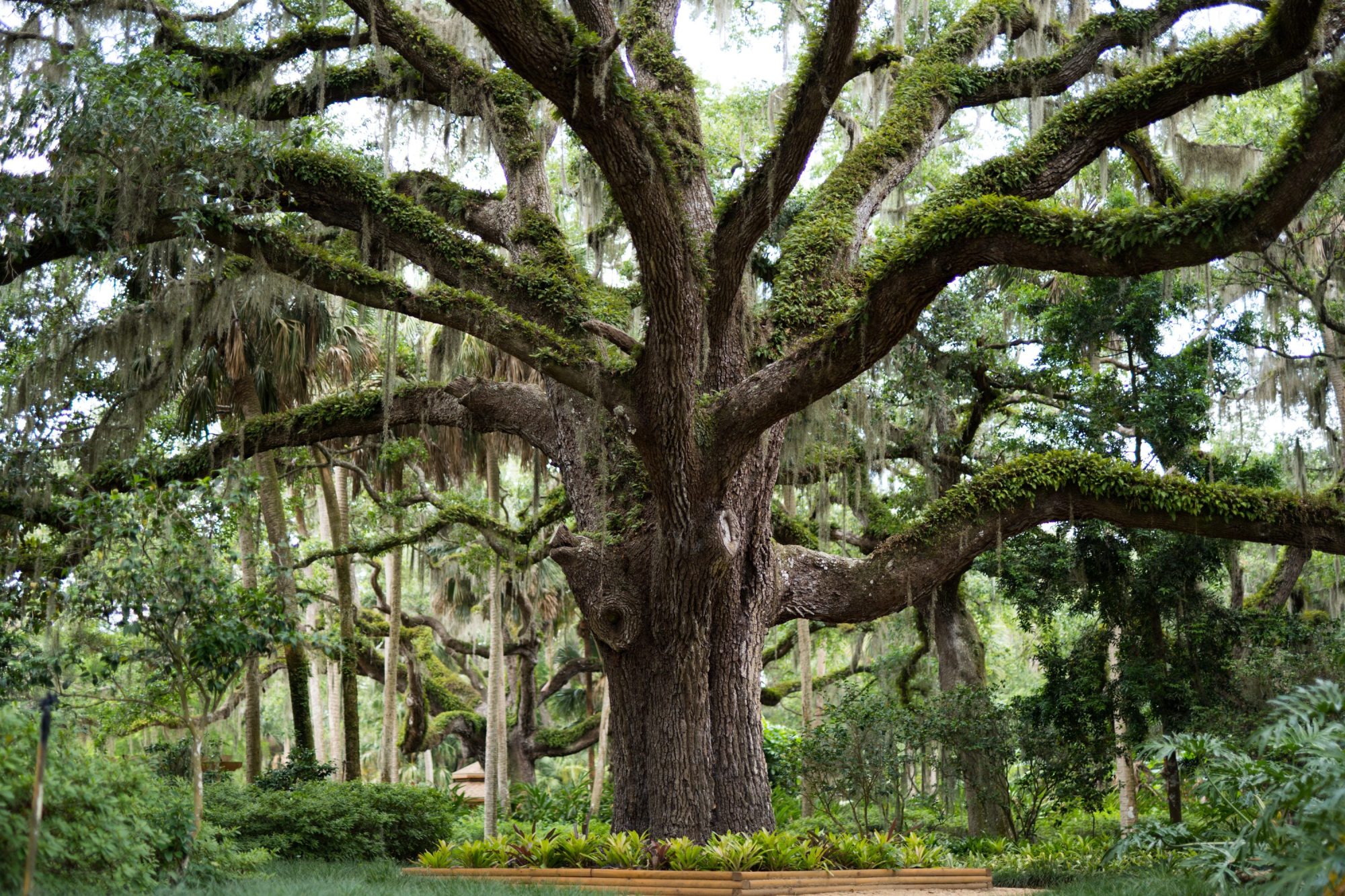
If the Palmetto is the sentinel of the coast, the Southern Live Oak (Quercus virginiana) is the undisputed king of the Lowcountry estate. These majestic giants are famous for their horizontal growth habit, often reaching spreads that are twice as wide as the tree is tall, providing a natural cooling canopy that can significantly reduce ambient temperatures on a property. The Arbor Day Foundation notes that a mature Live Oak can live for centuries, meaning that when you plant one today, you are creating a multi-generational legacy for your home or business. In commercial settings, the shade provided by these oaks can actually lower energy costs for adjacent buildings by reducing the “heat island” effect caused by asphalt parking lots. Our team at Oaktree Landscaping specializes in the careful placement and structural pruning of these oaks to ensure they grow strong and clear of power lines or structures. We often pair these massive trees with native understory plants to create a layered, “Old South” aesthetic that feels both luxury and authentic. For more on maintaining the health of these giants, check out our recent post on The “Crape Murder” Warning – How to properly prune without ruining your trees.
Why Native Plants Outperform the Competition
The primary reason Oaktree Landscaping advocates for native species like the Palmetto and Live Oak is their evolutionary advantage; these plants have spent thousands of years adapting to the specific soil pH and humidity levels of the Lowcountry. While a non-native species might require expensive fertilizers and constant chemical treatments to stay green, our native flora is naturally resistant to local diseases and requires 80% less water once the root systems are mature. Statistics from the Audubon Society suggest that native plants support significantly more local wildlife, including the pollinators that are essential for a healthy ecosystem. For a commercial property, this translates to a “low-impact” landscape that meets modern sustainability standards while keeping the Common Area Maintenance (CAM) fees low. We focus on quality over quantity, selecting the best specimens from local nurseries to ensure that your “Native Lowcountry” look is lush and vibrant rather than wild or unkempt. To see how we integrate these natives into a full-service maintenance plan, visit our Residential Services Page.
Environmental Impact and Stormwater Management
In our coastal region, managing water runoff is a critical concern for every property owner, and native plants are our first line of defense against erosion and flooding. The deep and expansive root systems of the Live Oak act as a natural sponge, absorbing thousands of gallons of stormwater that would otherwise overwhelm local drainage systems or cause soil loss. Furthermore, the Sabal Palmetto’s unique root structure helps stabilize sandy soils, preventing the “slumping” often seen on coastal bluffs or along lagoon edges. By choosing these reliable natives, you are contributing to the overall health of the Lowcountry watershed and protecting your own property investment from the long-term effects of rising sea levels and increased rainfall. At Oaktree, we don’t just plant trees; we engineer biological systems that work with the land rather than against it. You can learn more about our approach to sustainable drainage in our blog post regarding Innovative Stormwater Solutions for Lowcountry Businesses.
Enhancing Property Value with Authentic Aesthetics
There is a distinct “Sense of Place” that only native plants can provide, and in a competitive real estate market like Bluffton or Hilton Head, authenticity sells. High-end buyers and commercial tenants are increasingly looking for properties that reflect the natural beauty of the region rather than “cookie-cutter” landscapes found in any other part of the country. A mature Live Oak can add as much as 15% to 20% to the total appraisal value of a residential property, making it one of the best long-term investments a homeowner can make. For commercial shopping centers, the presence of mature Palmettos creates a “vacation feel” that encourages shoppers to stay longer and visit more frequently. We take a customer-focused approach, ensuring that your native landscape is tailored to your specific lifestyle or business goals while maintaining the highest horticultural standards. For additional inspiration on how to boost your property’s marketability, read our guide on Increasing Curb Appeal for High-End Lowcountry Real Estate.
Conclusion: Investing in the Natural Soul of the Lowcountry
Choosing native plants like the Sabal Palmetto and the Southern Live Oak is more than a landscaping choice; it is an act of stewardship for the Lowcountry’s unique environment. These species offer a level of reliability, wind resistance, and low-maintenance beauty that exotic plants simply cannot replicate. At Oaktree Landscaping, we are proud to be the region’s experts in native plant integration, helping our residential and commercial clients build landscapes that are as tough as they are beautiful. By prioritizing quality specimens and professional installation, we ensure that your property remains a vibrant part of the coastal ecosystem for decades to come. Let us help you transition your landscape into a resilient, native-focused sanctuary that honors the history and the future of the South. Our team is ready to provide the straightforward, expert guidance you need to make your next project a success.
Ready to build a landscape that stands the test of time with native Lowcountry beauty?
Sign up for a free quote today and let Oaktree Landscaping’s professional team design, install, and maintain a high-quality environment for your home or business. We specialize in the reliable, authentic species that make our region world-class.
Leave a Reply